Melodie de Jager
In grades 1–3, children learn to read to read to learn from Grade 4 and onwards.

Progress in International Reading Literacy Study (PIRLS) is a reading assessment instrument used to determine the reading competence of young children. The PIRLS assessment takes place in 5-year cycles with 57 countries participating in the most recent cycle administered in 2021. The expectation is that children should be able to read for meaning by the end of Grade 3, hence PIRLS generally assess learners in Grade 4. South Africa has been participating in PIRLS since 2006 and has consistently been performing worst of all participating countries. The results show that, despite marginal improvement approximately 80% of South African learners cannot read for meaning by the end of Grade 3 and are therefore unable to read to learn.
This implies that most children are functionally illiterate at age 10. How will they catch up on reading? Intermediate Phase teachers are generally neither trained to teach the mechanics of reading nor do they have time to teach a foundational skill that should have been consolidated in the Foundation Phase. This disadvantage our children. We need to ensure that they master the mechanics of reading before the end of Grade 3. One of the serious shortcomings in teaching reading in South Africa is the absence of preparing the child for reading – a process that should commence at preschool level.
Biomimicry – learning from nature
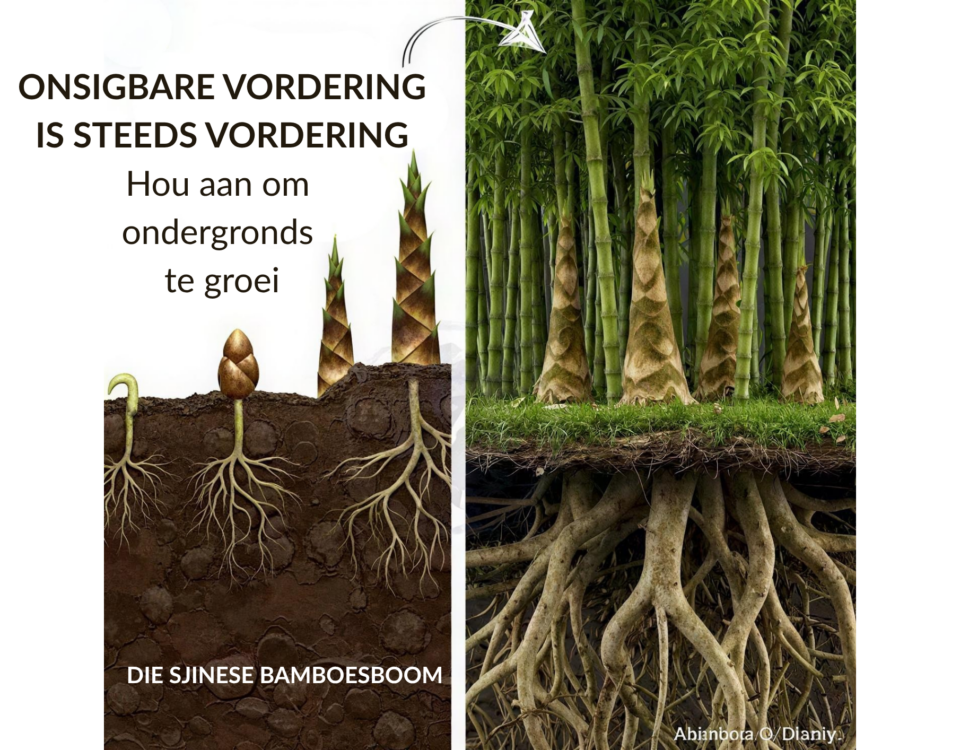
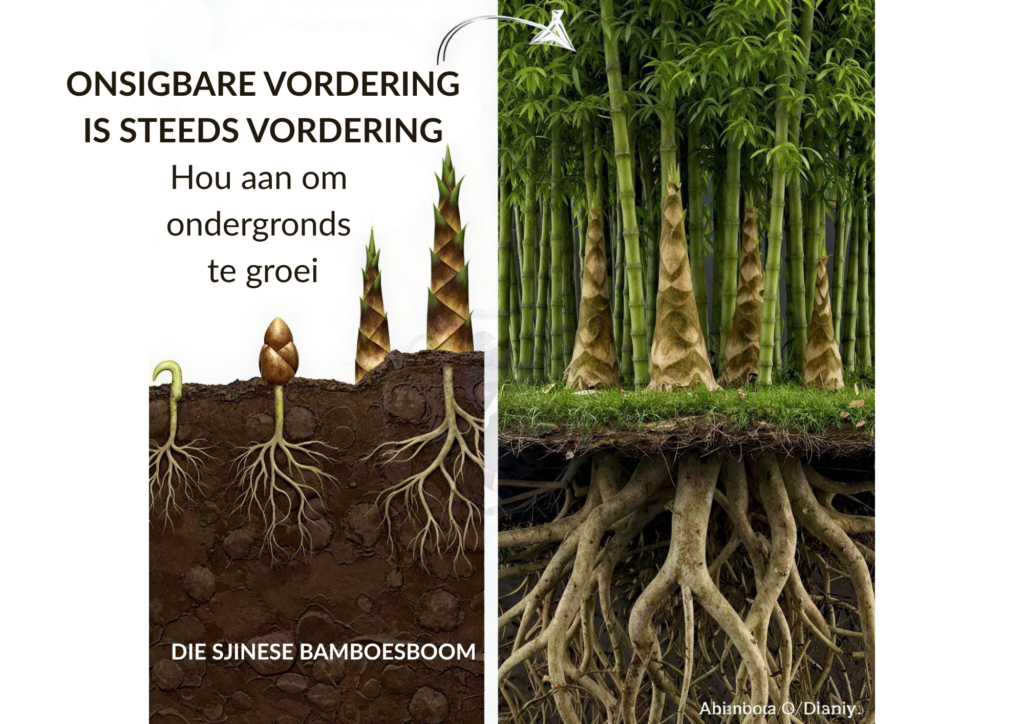
A story by Stephen Covey comes to mind that might be helpful in pointing us in a direction to address the national crisis we face in terms of reading. He describes the unusual growth pattern of the Chinese bamboo. In the first year, the plant grows 1 centimetre; in the second year, 2 centimetres; and in the third year, 3 centimetres ─ a total yield of 6 centimetres in 3 years. In year 4, the Chinese bamboo remarkably shoots up 10 metres!
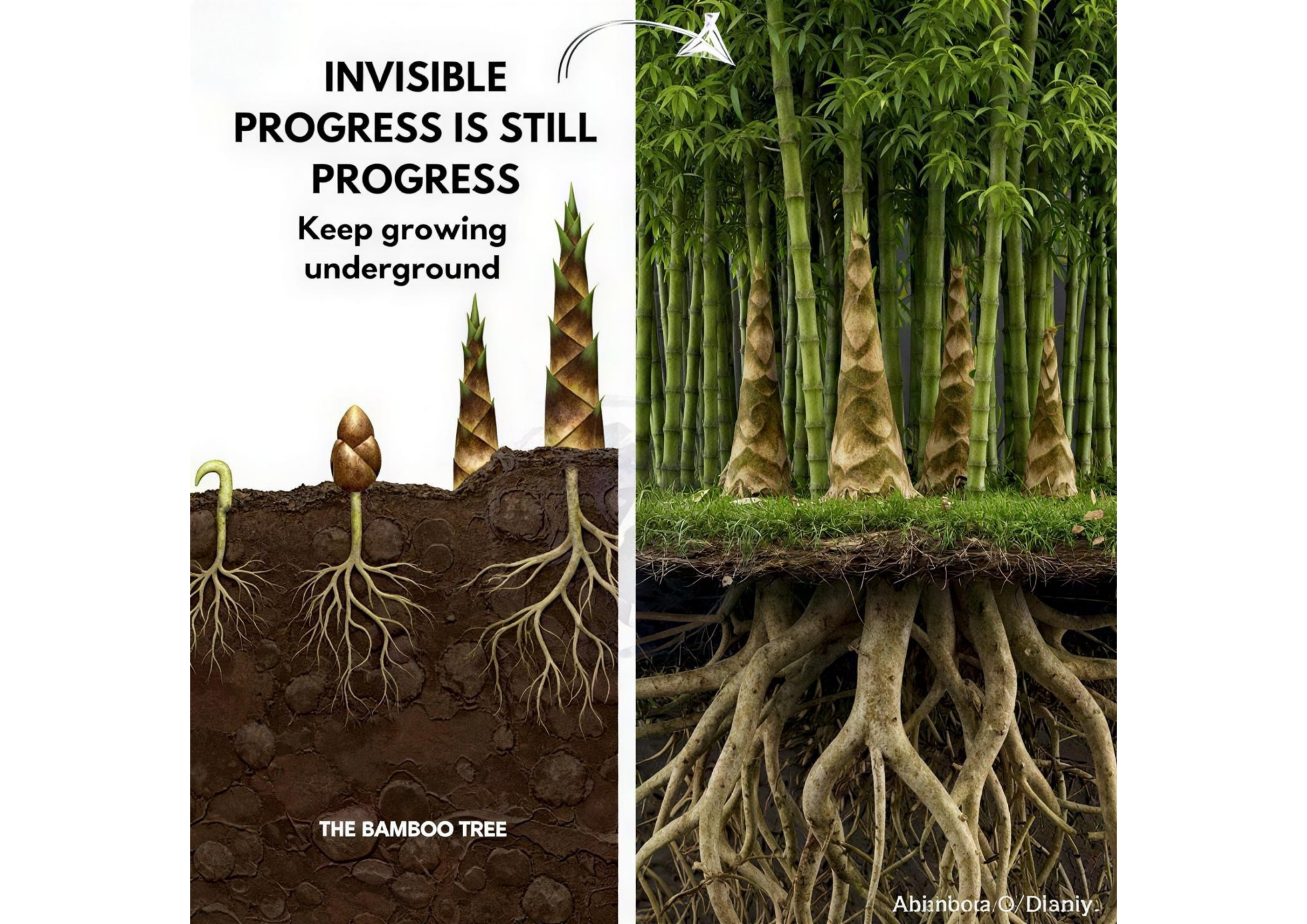
You may wonder what caused the sudden exponential growth between year 3 and 4, but that would mean that you search for the answer in the wrong place. You should rather ask: ‘What happened during the first three years that enabled a growth spurt of 10 meters in year four?’
The answer is that the growth pattern showed 3 years of low external growth because the growth occurred where we can’t see it – it took three years to develop a root system that would cope with such rapid development in year 4. The foundational growth essential for the phenomenal transformation developed hidden from sight.
Neurophysiology that supports reading
Like the bamboo’s roots, the foundations for reading develop largely unseen before they become visible in the child’s ability to read. This development begins with language and the neurophysiological systems that support it.
Language is the key to cognitive development and, ultimately, the key to progress at school. Understanding and speaking a language are highly complex skills that take years to develop and refine before the spoken or oral language can successfully be converted into written language.
A baby is quiet for many months, other than gurgling, laughter, a variety of cries and babbling, but that does not mean that she is not actively learning her mother tongue (or another language she is exposed to). By the age of 6 to 12 months the baby has already mapped out the sounds (phoneme inventory) of her native language.
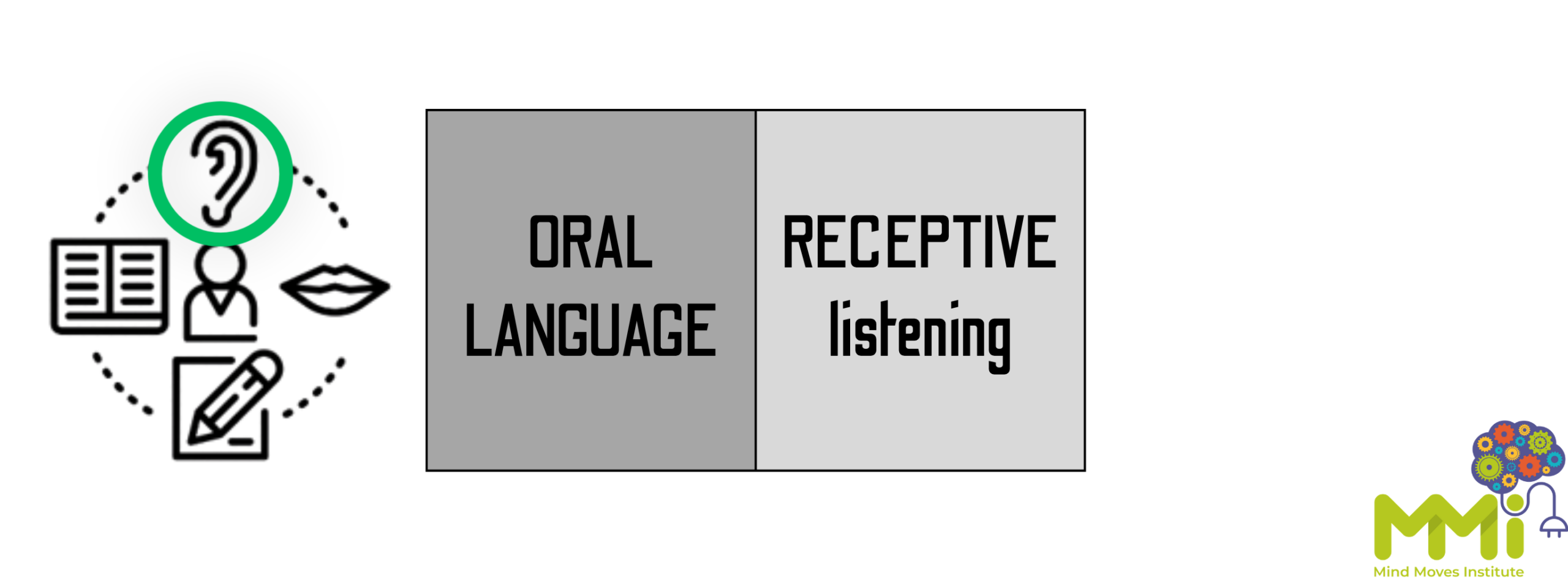 FIRSTLY, LANGUAGE NEEDS TO BE HEARD (RECEIVED in the temporal, parietal and occipital lobes of the brain)
A baby is born with the innate ability to speak any language on this earth without an accent, provided they hear the language spoken by mother-tongue speakers during the first year after birth. After their first birthday, the ear spontaneously starts pruning sounds that they do no longer hear spoken. This is one of nature’s tricks to use brain space for sounds that are heard and used – thus needed to communicate orally, and then the ears lose sensitivity for sounds that are not heard and used.
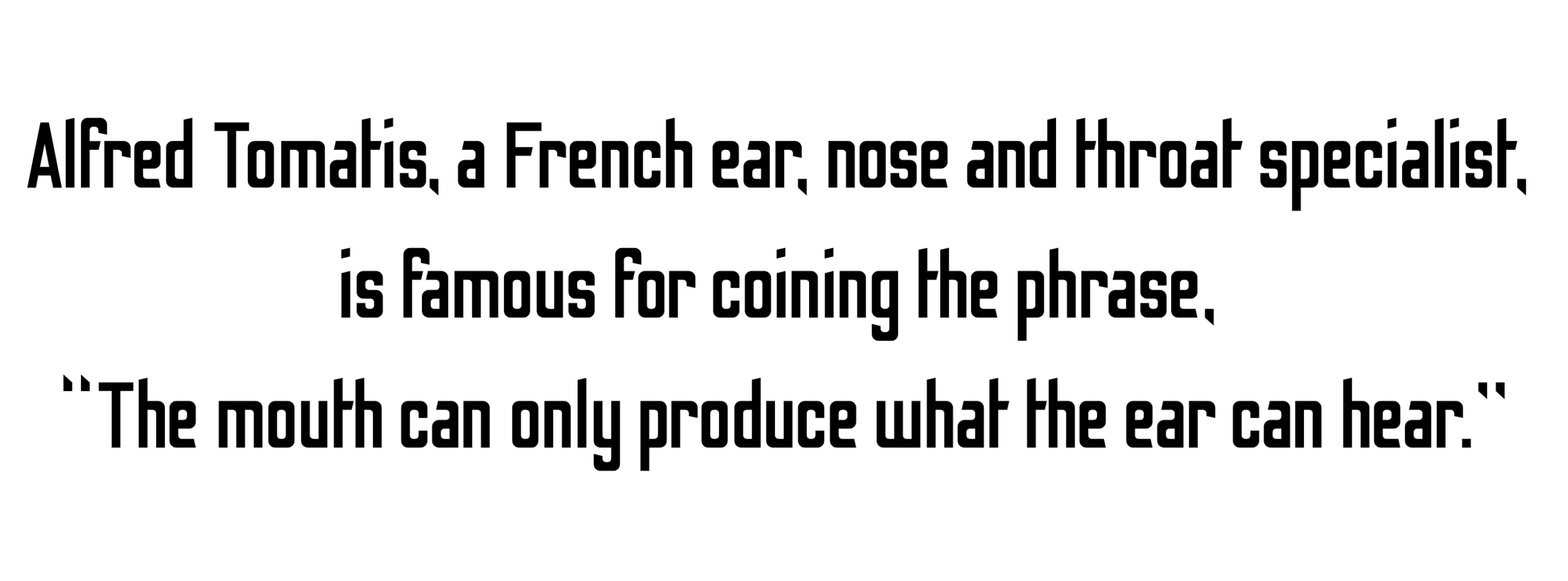
Listening and speaking are natural, inborn human skills. The ear tunes into the spoken word, and just as you tune into a radio station, the ear tunes in and adapts to receive the sounds of a language. The mother’s language always has a head start on all other languages because the baby is exposed to their ‘mother’s tongue’ for 9 months in utero. The vibration, cadence and sound system travel down Mom’s spine and through the amniotic fluid to give the baby their first experience of surround sound and oral language.
While in utero, sound is muted by the amniotic fluid to protect the baby’s immature nervous system from too much sound too soon. Once the baby has transitioned from a warm and regulated life in liquid to life in air, gravity with a myriad of sensations, the baby’s ears must adapt rapidly. The mother’s singing and high-pitched ‘motherese’ are nature’s perfect strategies to fine-tune mother-tongue outside the cushioning effect of the amniotic fluid.
The baby listens to language for months to fine-tune their ears to catch the sounds of a language (receptive language) before they start experimenting with these sounds in their mouths after birth.

SECONDLY, LANGUAGE NEEDS TO BE SPOKEN (PROCESSED & EXPRESSED via the frontal lobes)
For all babies, ‘speaking’ starts as a variety of cries, laughter and babbling. These first language utterances are universal ─ all babies start off making the same sounds, but as their ears tune in to the language(s) they hear, their babbling takes on more distinct sounds to reproduce the sounds they hear.
As they refine the fine motor muscles of the mouth and their language skills, they start saying words, but not always in the correct context, for example, I went to visit granny tomorrow. There is so much to learn!
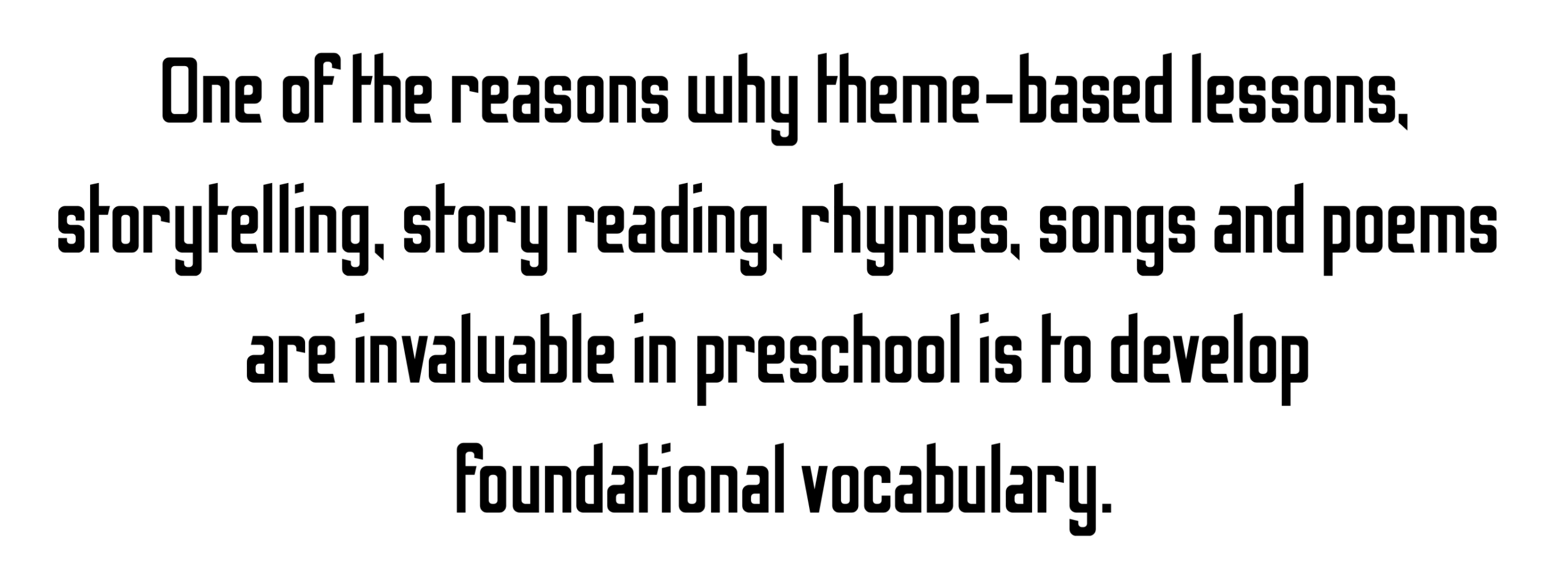
Like listening, speaking is natural. It is part of a universal and innate oral ability found in humans all over the world.
 THIRDLY, LANGUAGE HAS TO BE CONVERTED INTO SYMBOLS (ENCODING via the prefrontal and motor cortexes)
For years, auditory perception is developed while listening to:
- separate sounds – a, o (discrimination)
- hear what comes first, second and third – c-a-t (sequencing)
- name the last sound in a word – wind (closure), etc.
It takes approximately 6 years to master these auditory perceptions, to sensitise the ear to be able to break a sentence into words, and words into sounds (analysis/segmenting), and to put them together again (synthesis/blending) in a playful manner in a process called phonological awareness. In so doing, strong pathways are forged and myelinated between the receptive back and expressive front lobes of the brain, building the child’s sense of knowing and confidence enabling him to understand and respond with confidence.
Simultaneously with the development of listening skills, auditory perception and language proficiency, a child is encouraged to create pictures and symbols to represent their experiences, feelings and thoughts through drawing, painting, cutting and gluing, modelling with mud or clay, etc. These symbols are their own symbols, which is why they can ‘read’ their own creative art and make sense of what might look like scribbles to us!

Oral language is natural; written language is a manmade skill. Herein lies a possible reason why more than 80% of our children experience such profound difficulty learning to read – reading and writing are not innate natural skills; they must be deliberately taught.

In Grade R, children learn to write their own names, and so they cross the Rubicon between oral and written language. Now they are moving away from ‘my personal picture symbols’ to using universal abstract symbols like abc/123. The conversion of oral language to written language is one of the most underrated, underfunded and underdeveloped skills in any curriculum and may be one of the contributing factors to why our children battle to read.
The child need to be ‘prepared’ for the teaching of reading.
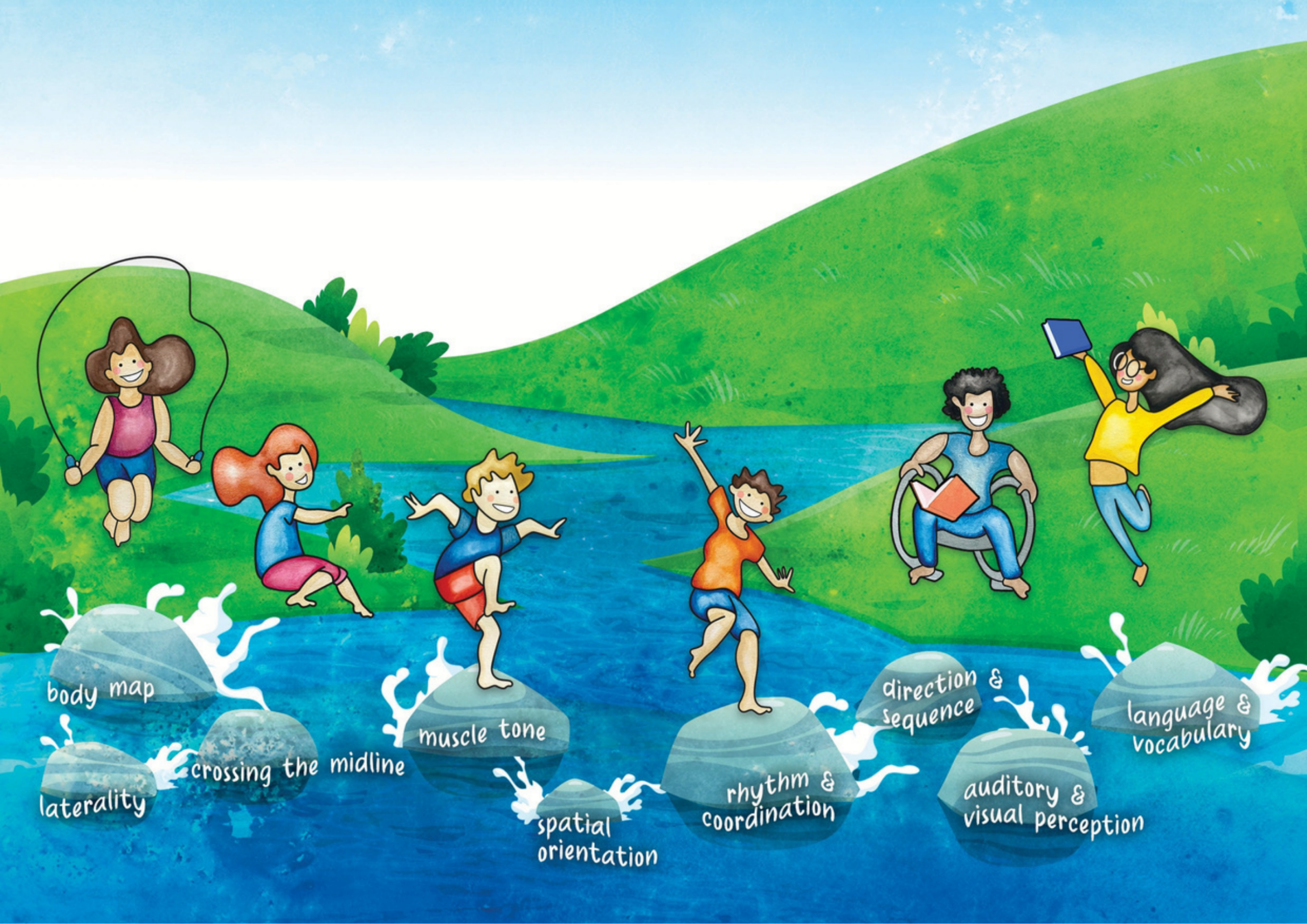
A child needs to show a level of neurophysiological readiness before they can learn to read. Reading readiness especially includes development of body image, laterality, cross-laterality, muscle tone, spatial orientation, gross and fine motor control, balance, rhythm, coordination, a sense of direction and sequence, auditory and visual perception, oral language development.
Only when a grade R child has mastered all the skills above, they are ready to convert oral language into written language.
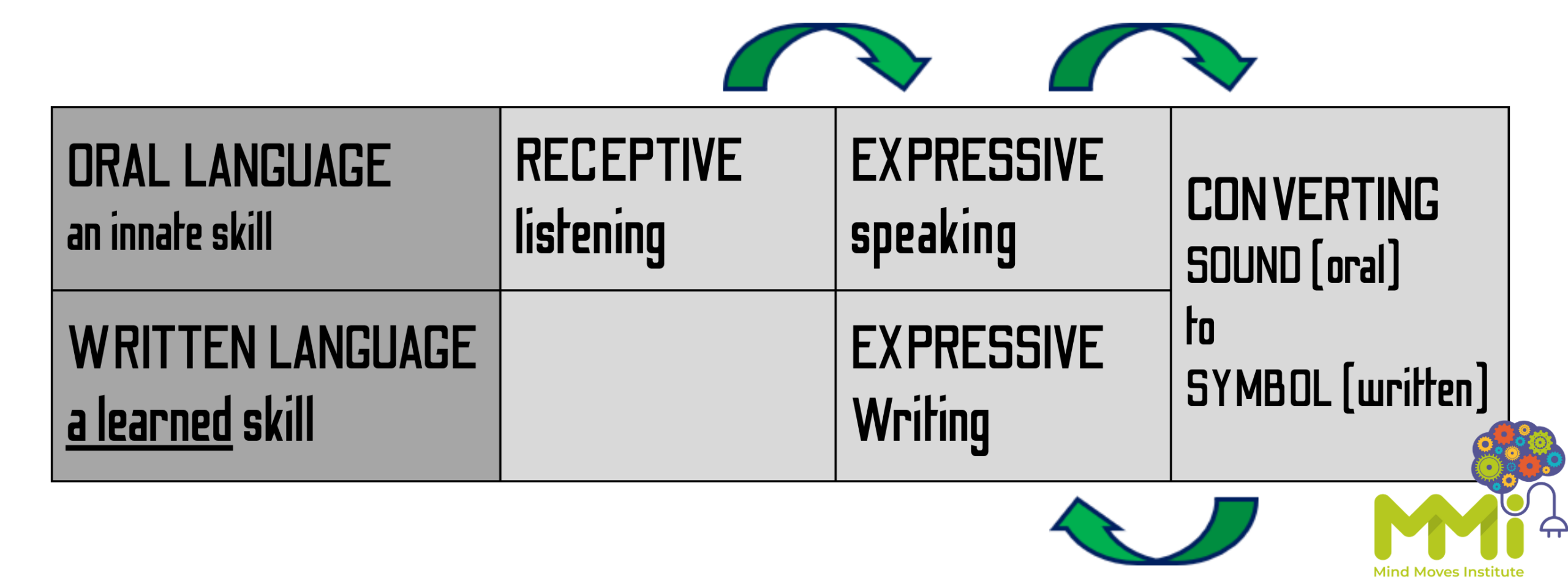

FOURTHLY, LANGUAGE NEEDS TO BE DECODED (extracting sound from symbols via temporal, parietal, occipital, sensory-motor and prefrontal cortexes with the aid of Wernicke and Broca areas)

Once a Grade R learner has spent a whole year playfully encoding single sounds into single symbols, developing an ear that can hear and understand the language spoken in Grade 1, a mouth that can pronounce the words of that language effortlessly, and a hand that confidently writes the sounds of that language in symbol form, converting symbols into sounds and blend words into sentences in Grade 1 might become attainable for most children.
In other words, before a child can be expected to decode written language, they need to have experienced the process of encoding their oral language into symbols.
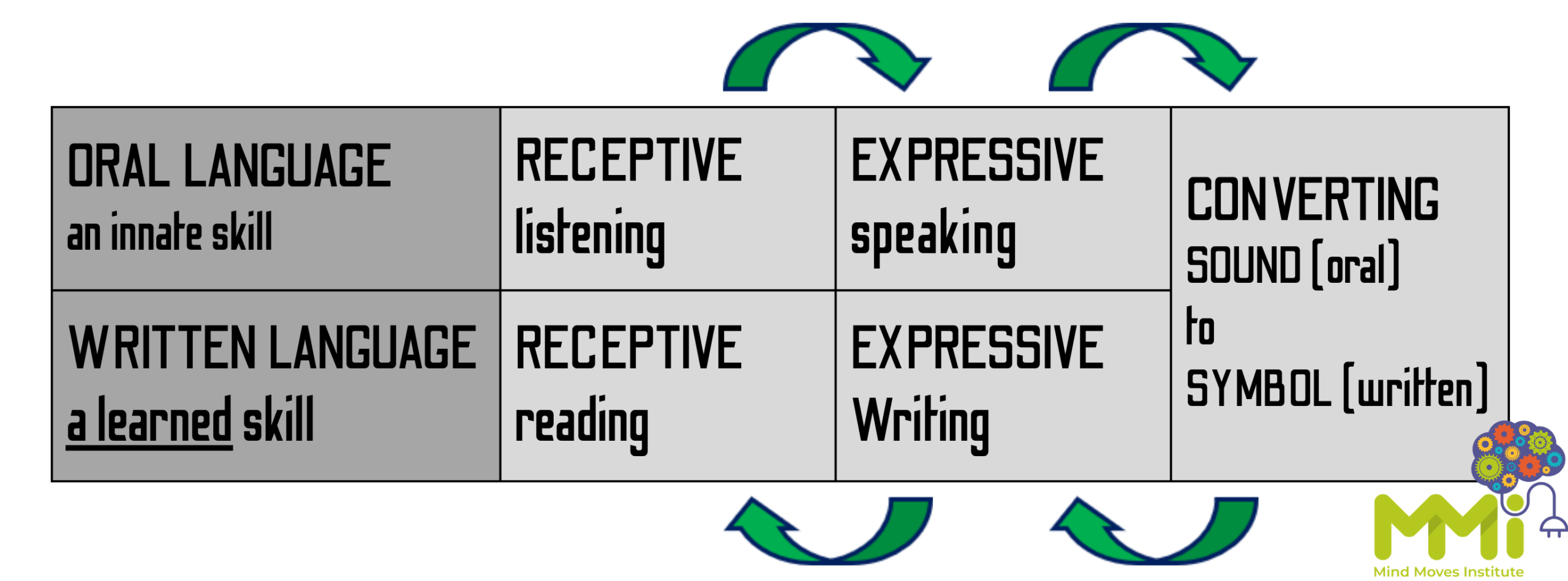
Schema developed by Prof. Lionel Posthumus
If reading is the ‘decoding’ of symbols or extracting sound from letter symbols, while writing is the ‘coding’ of sound into letter symbols, isn’t it logical that coding, or the playful conversion of oral language into the symbols that make up written language, should precede reading?
References
https://www.mindmoves.co.za/wp-content/uploads/2026/08/VVOB-and-KZN-TASK-TEAM-Presentation.pdf
https://drive.google.com/drive/folders/1LddnkS0Kj-utyq6yLvR9BtzDF9-90qSD?usp=sharing
https://elearning.mindmoves.co.za/readingreadinessprogramme/